
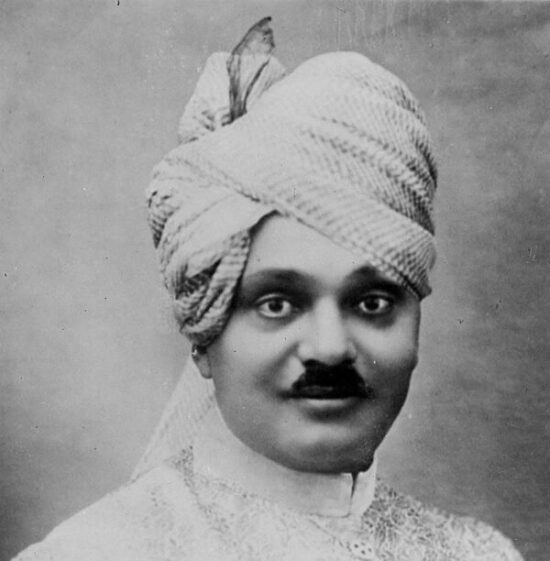
03 Jan When One Heart Refused to Close
Attachment, Moral Courage, and Little Poland in India
Some moments in history are shaped not by policy or power, but by a single human heart that refuses to close.
Little Poland in India tells one of those stories.
During the Second World War, between 600 and 1,000 Polish children arrived in Jamnagar, India. They were displaced, many orphaned, and deeply marked by war and forced labour. Most were Catholic. A smaller number, estimated at around 10–15 percent, were Jewish. Some Jewish children arrived openly. Others had already learned that hiding parts of themselves was the safest way to survive.
For Maharaja Jam Saheb of Nawanagar, none of this determined their worth.
He saw children in need, and he responded.
At a time when the world was closing ranks and hardening its borders, he chose to lead with his heart.
Choosing Care in a Culture of Indifference
Acts of refuge often look noble in hindsight. Living them, in the moment, requires something far quieter and braver.
By the early 1940s, global empathy was stretched thin. Borders closed. Refugees were assessed, ranked, and refused. Suffering became so widespread that turning away started to feel ordinary.
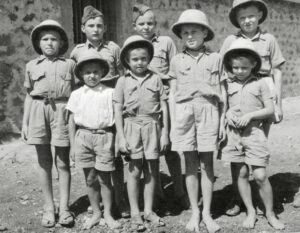 Maharaja Jam Saheb moved against that current.
He did not wait for approval.
He did not mirror the emotional temperature of the time.
He did not ask children to justify their fear.
Instead, he offered land, housing, schools, clothing, and food. More importantly, he offered consistency. He stayed present. He followed through. Over time, his care sent a clear message: you are not a burden here.
From an attachment perspective, that message matters more than any single act of generosity.
How Safety Is Actually Built
Attachment does not grow out of survival alone. It grows when someone is received.
Many of these children had already learned harsh lessons about the world. Adults disappeared. Safety proved temporary. Visibility felt dangerous. Need went unanswered.
Some had survived Soviet labour camps. Others had lost parents or endured long periods of hunger and emotional absence. By the time they reached India, their nervous systems had adapted to expect loss.
Then they arrived in a place they did not know and encountered something unfamiliar. Instead of suspicion, they found care.
Maharaja Jam Saheb did not sort them by religion.
He did not interrogate their identities.
He did not require sameness in exchange for safety.
He responded to vulnerability itself.
In attachment terms, he became a secure presence on a collective scale. He was predictable rather than volatile. He led with warmth instead of distance. Protection came without control.
For children whose early bonds had fractured, this created a new internal experience. Refuge became relationship.
The Lasting Power of Not Turning Away
One of the most striking parts of this story is its restraint.
There are no grand speeches. No self-congratulation. No demand to be remembered as a saviour.
What we see instead is a refusal to harden.
When parents, leaders, or institutions turn away from suffering, the impact travels across generations. Closed doors shape how people expect to be met in the world long after the moment has passed.
The opposite is also true.
When someone says, you belong here, the body remembers. Trust settles differently. Expectations soften. A counter-memory forms, something steady enough to return to when later experiences echo rejection.
That is why this story still resonates.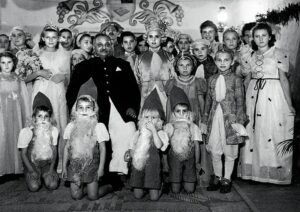
It does not tell us what to think. It shows us what becomes possible when care leads.
If this story resonates, you may want to explore more about how attachment shapes our expectations of safety, care, and belonging. On my blog, I write about secure attachment and emotional safety, as well as understanding different attachment styles that develop when care is inconsistent, overwhelming, or absent. These patterns help explain why welcome can feel so regulating, why rejection cuts so deeply, and why experiences like the one shown in this film leave such a lasting imprint.
Why This Story Matters Now
We live in a time when empathy is often framed as optional. Suffering gets filtered, ranked, and explained away. Many people carry the weight of feeling unwelcome or pushed outside the circle.
Little Poland in India does not argue with this moment. It does not shout over it. The documentary quietly shows what happens when one person chooses care over conformity.
That choice did not end the war.
It did not fix the world.
For those children, however, it changed the shape of their lives.
For those watching now, it leaves us with a quieter question. What kind of heart do we want to lead with, especially when it feels easier not to?
A Reflection to Sit With
There is no rush to answer this.
At some point in your life, where did you learn whether vulnerability would be met with openness or with a closed door?
And where did someone choose tenderness when distance would have been simpler?
Those moments stay with us, often more than we realise.
Watch the documentary Little Poland in India here:
https://youtu.be/rIPq-8RZxxM?si=KvI7CQ59AxTS2Z-s
Sorry, the comment form is closed at this time.